Let's go
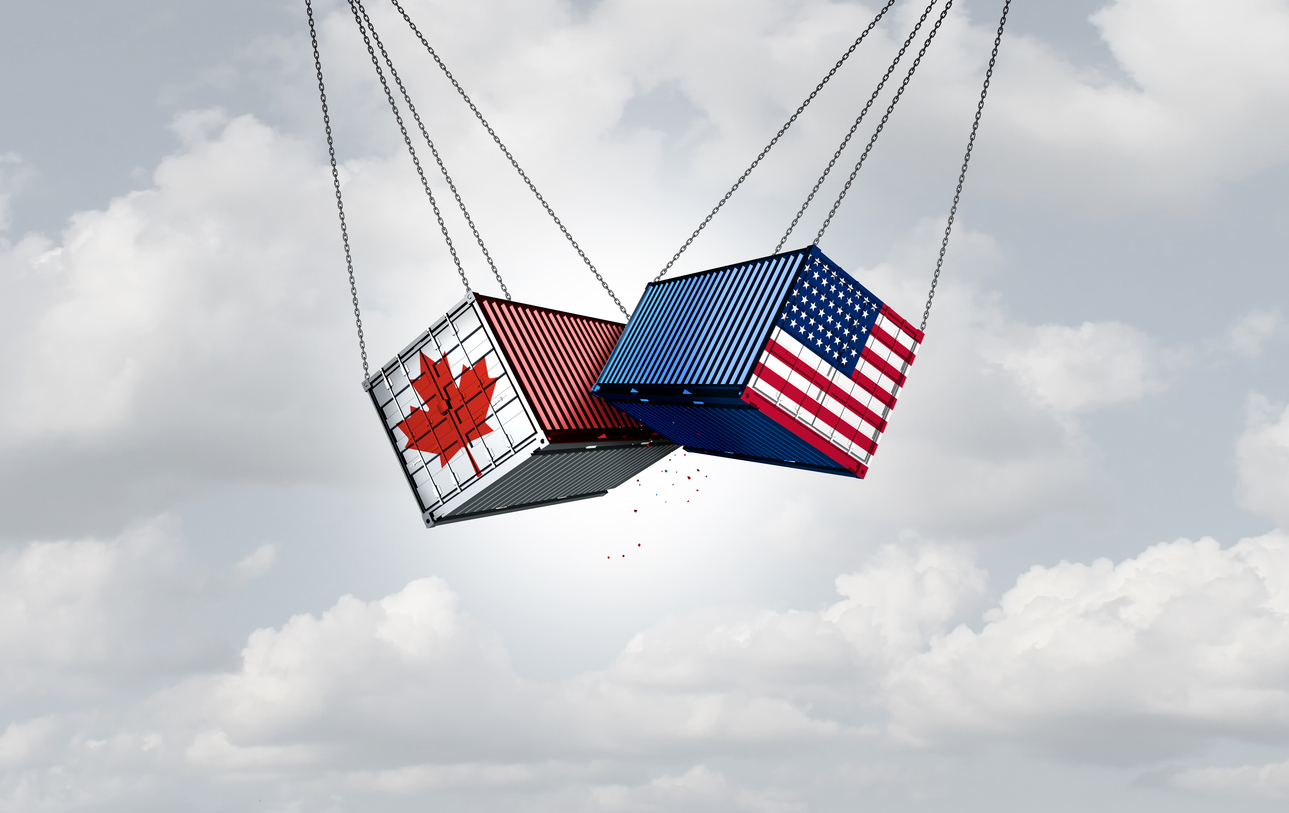
The Government of Canada has responded to U.S. tariffs by imposing surtaxes on imports originating in the United States. These surtaxes are being imposed in a prescriptive manner, targeting specific products and industries, and doing so through a phased approach. The impact, however, is no less significant on Canadian importers. This quiz will help you test your knowledge on Canada’s retaliatory measures and offers information often overlooked. Put your knowledge to the test and learn along the way.
The (Q1) 2025 Canada Tariff Quiz
trade disruption
Applied to a targeted list using a phased approach
D
Universally applied through a phased approach
C
Applied all at once on a targeted list of goods
B
Universally applied all at once to all U.S. imports
A
On March 4, Canada imposed a surtax of 25% on U.S.-origin imports in response to U.S. universal tariffs. Canada’s surtaxes are:
Question 1 of 10
Next question
Canada’s surtax is being imposed on $155 billion in U.S. goods. The first phase is made up of $30 billion in U.S. goods and began on March 4, 2025. A second phase on the remaining $125 billion in goods will take effect at a later date.
The correct answer is D.
Nope!
Correct!
False
True
True or False: The surtax Canada is imposing on the U.S. is exempt if the goods qualify for duty exemption under the United States-Mexico-Canada Agreement (USMCA)
Question 2 of 10
While Washington has given an exemption to goods that meet the requirements of the USMCA, Canada chose not to make this exemption on U.S.-originating goods coming into its borders.
The correct answer is B.
None of the above
In response to newly imposed tariffs by the U.S. on Canadian steel and aluminum.
An unprovoked act to compel the U.S. to remove its new tariffs.
The second phase of the tariffs imposed on March 4th.
On March 13, 2025, Canada imposed a surtax on an additional $29.8 billion in U.S. goods. This was done as:
Question 3 of 10
The new surtax was imposed in kind based on the value of U.S. steel and aluminum exports from Canada to the U.S. The list of impacted goods may be expanded to match the value of Canadian steel and aluminum derivatives, which are also impacted by the U.S. action.
The correct answer is C.
True or false: Goods that are transshipped into Canada through the U.S. without modification will have the 25% surtax applied.
Question 4 of 10
Goods that originate in other countries and do not go through substantial transformation will be considered to be originating in those countries even if entering Canada through the U.S. and, therefore, the new 25% surtax would not apply.
True or false: The surtax is not being applied to low-value goods that fall within Canada’s $150 low-value (de minimis) threshold.
Question 5 of 10
The surtax will apply to all U.S.-originating goods outlined in the list of targeted products distributed on March 4, irrespective of value.
No one really knows
April 2nd
March 25th
April 4th
The second phase of Canada’s retaliation against U.S. tariffs will be launched on:
Question 6 of 10
While Canada has said it will delay the implementation of Phase 2 until April 2nd, this date is not set in stone as the implementation will ultimately depend on what action, if any, Washington chooses to take before or on that date with respect to its original action against Canada.
True or False: Since the surtax is not being exempted for goods that qualify under the USMCA, there is no longer any value in using the USMCA?
Question 7 of 10
The USMCA’s purpose is to remove Most-Favored Nation (MFN) tariffs that each member state would otherwise impose. The surtax imposed on March 4, 2025, is in addition to these MFN tariffs. By using the USMCA, importers can avoid having to pay the MFN rate as well as the 25% surtax. Not using the USMCA requires the importer to pay the MFN rate, which varies by product and origin, as well as the 25% surtax.
None of the above.
Do nothing because the bond need only cover the duty outlay associated with the value of the imported product, not the outlay associated with the tariffs.
Pay interest on the amounts exceeding the value of the bond upon entry into the country.
Get a more substantial customs bond to account for the increased duty outlay.
Customs bonds are required by customs agencies to insure the duty outlay for goods moving into a country. In the event tariffs regularly push duty outlays beyond the value of a customs bond, importers would have to:
Question 8 of 10
Customs bonds must account for the total value of duty outlay, which is based on the percentage tariff placed against those imports. Insufficient surety could result in goods being held at the border until duties are paid. Importers whose bonds are of insufficient value to insure the additional duty outlay associated with tariffs will require a more substantial bond.
The correct answer is A.
True or False: Importers who have paid higher-than-necessary duties due to incorrect valuation or classification of goods will not have recourse in the case of the surtax?
Question 9 of 10
Importers will have the opportunity to request refund of duties related to surtax as they would with any other duties.
The Canada Border Services Agency in concert with government officials.
Government officials with industry consultation.
Government officials without industry consultation.
Industry representatives at the request of the Canadian government.
The products in the second phase of Canada’s retaliation against U.S. tariffs is being compiled by:
Question 10 of 10
End Quiz
The government of Canada has been engaging members of industry to identify instances in which the surtax may have an undue adverse impact on certain industries, or that would have an outsized negative impact on the country’s economic performance.
Learn more
Learn more about how Livingston helps businesses optimize costs, reduce risk and achieve supply chain efficiency.
Access articles from Livingston's trade experts on the impact of U.S. tariffs across North America.
Restart quiz
Click to learn more
You've just scratched the surface.